Visar inlägg med etikett Thoughts. Visa alla inlägg

4 december 2020

Last Day On Earth: Survival

My wife enticed me to start playing Last Day On Earth: Survival from KEFIR last Spring. Mostly she screamed out loudly when she got killed and lost her tactical backpack (the biggest backpack in the game) and I asked why she kept playing it. She often answered with one word: "because..." (and was back in the game).

Because it's a game that drag you into it, you want to play more, you level quite fast, you can - if you want - buy coins to boost your energy. In many games, like HayDay, you need to put in real money to be able to be a hardcore gamer, but that's not necessary in LDOE if you have patience. However, you can't take a shortcut and buy everything you want to succeed, that's the main reason why I keep play it. I have a love/hate relationship with this fact because some things are pretty darn hard to find but it also make me save my real money and keep me playing.

For example, when I realized I can modify several weapons with one done weapon mod I started to collect mod-plans and farm the parts. That objective also made me overcome my fear of the Big One or go deeper into the more difficult maps.

A brief introduction of the game

You have survived the pandemic that wiped out 90% of the Earths population and now you need to survive a zombie apocalypse. In this world most of the living (or nonliving) beings are either enemies or resources, so the first is mainly composed by zombies, aggressive wild animals and most survivors (PvP) and the latter by plants, minerals and wild animals you can get something from but that will not try to eat or kill you. You have to build a home base, your safe spot except every 24h when the zombie horde attacks your base (avoid be in your homebase at that time!) 

Learning that occurs from HayDay is for example math and the ability to deal with money, but also collaboration and teamwork. But what does LDOE teach you? Or what possible learning occurs from LDOE? Roberto Alvarez Bucholska made a blogpost about it in February 2018, interesting thoughts yes, but the blogpost is nearly three years old.

Learning objectives of LDOE: Survival

First, languages.

If English is not your mother tongue you need English to conquer not only the game itself but also the wiki. Wikis are always reliable sources for practicing another language, you learn without thinking, you achieve the learning when you finally get your quest solved!

Second, creative writing. 

Both Elegy for a Dead World and Storium use game mechanics to encourage creative writing. In LDOE:Survival you explore the destroyed civilization, after the pandemic (terribly current with COVID-19 ravaging the world right now). With only 10% of the worlds population still alive you have two objectives: (1) search for the truth (in game storyline) and (2) document an entry journal of how you will survive in this zombie apocalypse.

Third, skills in collaboration, communication and teamwork

Key competences of lifelong learning. In Season 9 the developers lowered the level to join in the crater with a second character. Instead of must be level 150 it's now only level 15. Your students can quickly level to 15 and then you can team up with a guild in the crater: both co-op in the nearby areas but also do instances together. To be able to level in your business you need to go to instances, you can't go alone.


20 mars 2018

The Esports in education journey

For the last three years I've been working with esport in education and how to implement esport courses into an existing vocational program. Therefore, from this very beginning, you should be aware of there's (at least) two different ways and mindsets when you bring esport to school and education. As Finland for about 750 years (!) belonged to Sweden, Finland still compete with Sweden and of course, everything that happens in Sweden sooner and later comes to Finland. Therefore, Finnish media nor the federation, could believe the fact we were at the same page with Sweden in the Fall of 2015.

I'm working as a remedial teacher at Yrkesinstitutet Prakticum, which is the only upper secondary vocational institution in the Greater Helsinki area where the language of instruction is Swedish and that offers initial vocational education for young people and adults.

Anyhow, the news of the (school) year 2015 was that you could study esport, just as any other sport, at Arlandagymnasiet in Sweden. No matter if you were a football- handball- or icehockey-player, now you could start learn to be an esport pro at this sports college. Later we understood they got 7 students this first year and in the Spring they had 4 left, they have later been struggling with the in gaming motivation. Also, one important thing to notice. First you have to have good grades, then an esport talent.

That Fall - 2015 - we had another situation: We had the third year's student who misunderstood the meaning of freely elective courses. It was never free-if-you-wanted-courses but courses-you-have-to-choose-freely. I started to wonder, do they have any knowledge or interest that we can make into knowledge and study points?

All said: esports!
What the heck is esports?
In school???

There my esport in education journey started.
I soon teamed up with the school's (traditional) sports coordinator (also national handball coach for youth players) as I soon come to realize students need physical exercise in order to be able to stay focus and handle stress in game.

That esport journey is well documented.
The course content was the worst part to make a sketch of as we had no idea. What we roughly sketched up in the Spring of 2016 and what we planned to do the schoolyear 2016-17 sure helped but what the Finnish esports federation (SEUL) really wanted was course contents like this (including scope, objective, content, method and assessment).

As the Finnish vocational curriculum changed 1.1.2018 we also had to change our course. Or actually and more exactly, we - despite Sweden - have a possibility to make an exam part of a vocational education local. Therefore we can offer 20 credits out of 180 about esports

The difference between Sweden and Finland is quite simple.
  • Sweden have former esports professional coaching students inside mainly two games: CSGO and LOL.
  • Finland have teachers, experts in different subjects, teaching life skills needed in esports.

With that said, our course content is suitable for all those who now and in the future plan to work in the field of esports, but it isn’t limited to just playing. Possible professions in the field of esports are for example
  • Professional / Semiprofessional player (there's a difference in Finland)
  • YouTuber
  • Streamer
  • Blogger / vlogger 

Even though we now will start to be online ingame, it's not to coach the students in their game - in fact, the choice of game is not important! - but focusing on the personal development of the player. Of course, individual training must be both goal-oriented and significantly more than 5 credits in time, but we think it is realistic to demand 5 credits from the school or the educator to promote the players of tomorrow.

This esport journey finally ended up in the Educator's handbook to esports, which you can find here. Please be aware that as any instruction manual, all three languages (Swedish, English and Finnish) is in the same book! As I assume you want to read the English version of the handbook, scroll down to page 37 something and you'll have the English version.

In the same way as it's a handbook, it's also a textbook to students who wants to learn languages!

Finally, esports as a learning environment. 
Each year we - Yrkesinstitutet Prakticum - host a CSGO tournament: Insomnolence

It's an esport event arranged by students who, of course, get supervision of teachers. We have "business clerks" make the event, "hotel receptionists" that welcome the guests, "business information technican" who handle the twitch and matches, "ICT assemblers" doing the network and power supplies and "media assistants" that makes the production that streams out in the world via national TV!


22 december 2016

TeacherGaming Analytics

In mid November we did a field trip to TeacherGaming in Tampere together with the Finnish Swedish iLearning tutors. We had the honor to listen to COO Mikael Uusi-Mäkelä who talked about what happened after MinecraftEDU and showed us a very neat tool: TG Analytics!

To be able to monitoring your students while they play any game, connected to this analytic platform, would be like a dream come true. It will save so much time when following up students activities! Best of all, when you see what skills they have practice and which ones they have not, you should be able to push out that needed skill to their next log in. That was actually the feature that hooked me.

Back home I immediately contacted them and signed up as a beta tester.

And please keep this in mind; the platform is not ready!
You are a beta tester.

Some people might look at it and think it’s the complete product - which it's not - and leave it when they see something broken. When you see something broken you report it, that's why you are a beta tester!

With the experience I've got working with this kind of tools is, it has to fulfill mainly two things else teachers and schools won't start use it

1. The price has to be low.
With that said, usually 500€ sound expensive while 350 students which cost 2€/school year suddenly is affordable (even though the price just turned higher).

2. It has to be simple.
Teachers - or parents - learning curve has to be low. The tool has to be that simple so you could learn it within 5 minutes. Already to use tech usually stress teachers enough to avoid adopt them, no matter how awesome they might be!

However,  the games themselves can of course be advanced, Students and/or youth most often surprise the older generation ;)

Does TeacherGaming meets my requirements?
As they're in beta phase there's no price tag just yet, but what I've understand from my discussions with the dev team it won't be expensive. The tool itself will most probably be free but the games connected to the platform will cost some.

Simple.
I just love how simple, clean and easy it is.

First I log in to the platform and I create my class 


Simple right? I name the class, an ID is generated and now my class is up! Next, we add a student, it's as easy as create a class. We write the students name, and we also get a student id. 


The skill tree is another awesome feature. You should be able to pick your "own" curriculumno matter if you're teaching grade 1-3 in US or grade 4-6 in Sweden.


The Dashboard, it's where everything happens and you can follow your students (or childrens) progress. But hey? No games added yet? Nope, students havn't logged in so there's nothing to see.


But as I started a code thinking course, I'd like my student to play Switch&Glitch. I've installed the game on the device and now my student log in, using the class id and her student id. As soon as she, my student or actually daughter, are logged in to the game, real-time information will start to show up in TG Analytics. How awesome is that?


When I click on my student I will get up more information about the skills she's learning while playing the game!


Sounds interesting? 
Why don't sign up as a beta tester you too?

4 februari 2016

Learning that occur in HayDay

Someone said that it is doubtful whether HayDay really can be used as Game based learning, but well, this is what happens when I use it with my 7 yo daughter.

For you new readers, a summary:
A couple of months ago I started to think what you can learn of HayDay so I come up with some thoughts about it, this post and this post.

So what happened?
During the Christmas holidays my daughter AquaVera started to play HayDay as well. Seven years old, wanted to have an app we could play with together and as I'm HayDay addicted she wanted to see what makes me play it. 

When she earlier hijacked my game she had used both all my diamonds as gold to buy stuff. Suddenly with an own game she starts to be careful how to spend her cash and she also saves the diamonds to something special. She also starts to learn you can't buy everything you want, you have to save money to afford wanted items (bakery, grill, jam maker and more).

So the first learning occurred was the ability to deal with money.

In HayDay and at level 18 you can join a neighborhood and she joined the one I'm in. Every week you and your neighbors participate in a derby, you choose and pick missions and when you have completed them you'll get points. The harder challenge, the more points.

Our racing horse getting as far as our points get him and it didn't took long until she understood, wanted to get the missions with most points and also compete with the neighbors. No one wants to be the last on the score table.


The second learning occurred was collaboration, even though you compete about the internal ranking you do help each other to fulfill those missions so you win the derby. 

The third learning occurred at the same time: languages, while decode text and write own sentences. Same as in school, but now when there's rewards involved she challenge herself to the limits (it's a game!)

To some of the challenges, like the river boat, you get a hint what you'll need to the next boat. 

Now you have to practice your skills in foresight and planning: can I prepare for the next boat? 

This is hard for a 7-year old girl, it's usually something you should learn later in school and what my students, 10 years older, still struggle with.

The forth learning occurred was therefor math and the three mathematical operations of addition, subtraction and multiplication. Now the operations didn't stop at 10, as in school, but as far as she had plots to plant. Every plot gives also the double amount when you harvest.

And just as you this classic example of understanding multiplication you can create it visual by yourself inside HayDay.


In HayDay she has 
  • 5 (fields) * 2 (plots in each field) = 5 * 2 = 10
  • 2 (fields) * 5 (plots in each field) = 2 * 5 = 10
  • 4 (fields) * 3 (plots in each field) = 4 * 3 = 12
  • 3 (fields) * 4 (plots in each field) = 3 * 4 = 12


Our next learning project is the magic skill of foresight and planning. 

Let's stay there at foresight and planning...
I had a discussion with a work mate the other week, as we both have connected our games to Facebook we're neighbors. I asked him what he have learnt of playing HayDay. Of course he hasn't learn a thing! 

But when I had him to have that important second thought he actually came up with something brilliant: 
Production chains

Hay Day actually teaches all the steps in the production chain! All small steps to a finished product, all steps are equally important. And, just as in real world, if you are unable to produce one or more steps, you can purchase that service.

Three months ago we were out on a field trip, we met a CEO that was looking for workers with the right mindset. Among other things: a positive attitude as well understand the importance of being a team player

Team player with this example: 
Even though you are hired to do one thing you have to be flexible enough to also temporarily jump to another spot in the production chain if it will be needed.

Where can you learn to understand the production chain for free and when it's fun...???
HayDay...

19 november 2015

eSport and education

Since September I've been working with a new project: e-Sport (in education). 

Instead of forbid gaming, what if we take advantage of our student’s interest?

e-Sport happens to be the news of the year in Swedish schools this autumn, where sports college and national sports schools in the same way as they train football players, hockey players and so on also now has the focus e-Sport.

In the Finnish vocational school and our curriculum, we can’t ourselves replace a qualification module toward something we want just like that. However we have a small part free courses which students themselves choose, where we can offer studies in e-Sport. To be able to do this, as those free courses also should strengthen professional skills, we have to ask ourselves: What do you learn in a game that would be important skills in both classrooms as in working life?

Now I happen to have one course, this mission, right now, to teach the students to define, plan and document problems. It seems this is very hard and they also give up in an early stage. But, surprisingly, they do exact the same thing when they play a computer game, but in the game they refuse to give up! Why?

For example
At Sunday evening, your team will have an important CS:GO match and it turns out you will play a new custom made map. How do you solve the problem? 

You have a problem, a new map. You search every possible forum of any threads or clues until you get the map. If possible you install it on a local server and you gather your team, you play and explore, you evaluate the teams experience. Maybe you even write down your thoughts and game plan.

This is exactly what we want them to do in the classroom.
What if we confirm this skill in a safe environment? 
Would they be able to take that skill out in the classroom and to working life?
I don't know.
It's worth a try.

And we - Yrkesinstitutet Prakticum - happen to be first! No one has thought about this opportunity before us!

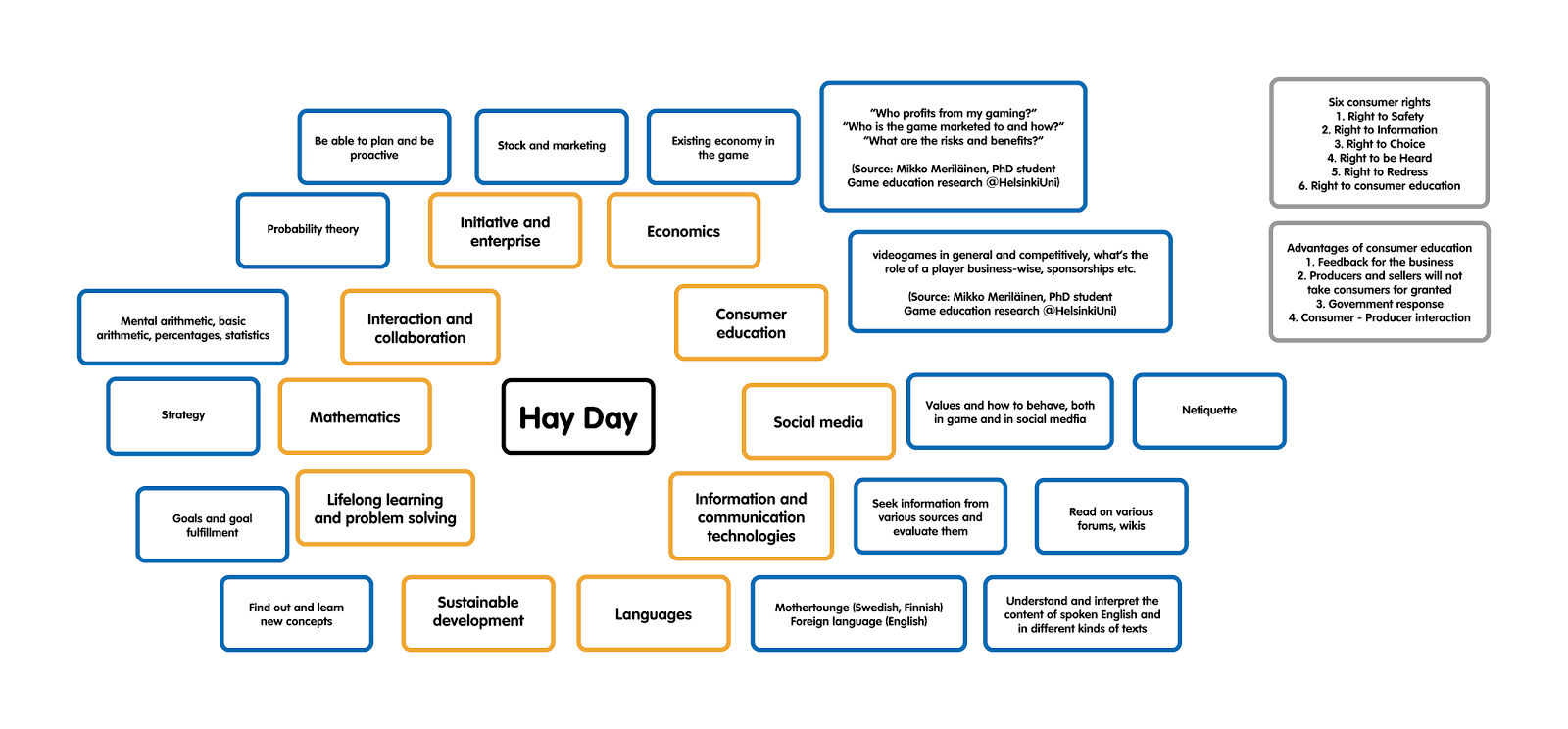
We have put together a mind map, things we believe you would be able to learn through games and e-Sports. All we have to do: stop see problems, start to see possibilities! It sounds easier than it is. Again, the feedback we get from this mind map confirms that we are thinking in a whole new way!


We started this as a learning project within the field of our Datanom (Business Information Technician) education in Porvoo (Borgå) but it quickly changed to something complete different:
A wellness project!!!

SESF, SEUL and Team Menace are all experts we started discussions and collaborations with and they all emphasizing the importance of well-being and physical health: fixed routines, structure of everyday life, diet, sleep and exercise is at least as important as in any other sport.

Teijo Sepponen, CEO of Team Menace gave us this most valuable feedback:


We now have 23 students in this project, people from four different classes. We have one CS:GO team and two teams of LOL (League of Legends). They practice and play matches from home and they get theory and exercise with a personal trainer in school. Both activities generate study points. Everything they do within the project they put in a notebook, a training diary. These three e-Sport teams are also our school teams on equal terms as all other school sport Team Prakticum compete in.

We do have some challenges and it's not strange since we started this directly without directly planning, but with an idea that we learn by doing. We, the two teachers involved (the school's athletic coordinator and I) have also had fully booked calendars with no extra time to start the theory lessons or workout with a personal trainer. As in any other school athletic teams you have both less and more experienced players, add the fact many of these students never been in a team and therefor don't know about team spirit.

For example: 
What it means to be in the school team? Yeah that although you do not have the desire to train, you must still come. 

Today I talked with the third graders (last year students) and they do handle way more than I thought or anyone has thought. They have also taken on the role as educators, to help or explain the younger students. To be able to achieve this normally you have to promote some students as a tutor, here it happened automatically. It does happen a lot between 15-16 years old and 18-21. 

A couple of weeks ago I talked with one Finnish CEO, what kind of skills he want us (Vocational institutes) raise, create and produce. He had a wishing list like this:

One wish is that we train our students so that a worker has not only rights but also obligations

This is actually straight from the above example of what to do when you’re in the school team.

He wants to hire positive team players who can think for themselves, they must be deployable, flexible and loyal. Furthermore understand that the big picture is important and that one can take in and do almost anything. Just because one is employed to program, you might sometimes need to stand on the factory floor. 

This is interesting, because it’s just what happens in a game and e-Sport. Without listed skills above you won’t make it in game. When you get two players out in an ice hockey match, you’re dead. When you get two players out in e-Sport you know you still have a fair chance to win. With two tanks dead in game, the rest of the team change roles to master the new situation.

Again.
What if we confirm this skill in a safe environment? 
Would they be able to take that skill out in the classroom and to working life?
I don't know.
It's worth a try.

We have received funding for this year. We now have the opportunity to put our plans into reality. Our players have got (1) a discount card to the city's swimming pool, along (2) with a personal trainer they shall start training at the gym once a week (and (3) get breakfast afterwards) and we’ll also (4) dress them up as a team. Furthermore hire interesting (5) lecturer, hopefully (6) send them to Assembly (with no stress of winning, instead having fun!)

We also like to plant some ideas of sports psychology, goal setting and goal monitoring and team spirit. 
  • What else do you suggest? 
  • Do we miss something important? 
  • What have we not thought of?


23 oktober 2015

This is not Gamification

For a second I thought I'd finally managed to reach Nirvana, the hot spot of Gamification. And by saying this, to clear this out from the beginning it's not Gamification but anyway an important experience to share.

What am I plan to do?
By introducing a notional currency we hope that we can save money. Because we use the "money" as points or XP and with prizes to win, I thought for a moment that this was the same as Gamification. But it's not. It's a board game, as Monopoly.

Or something else.

Everything need not be gamifying, you can create interesting and inspiring educational activities anyway.

We have two goals:
  1. Our students need to understand the value of money, what a budget really is and what the consequences are if it is not kept.
  2. Savings in real world. Or more precisely, if goal number one is met, we will not need to replace lost or damaged materials. Perhaps we don't need to have the double of everything either.

By introducing this fictitious currency (Peuro, P-euro, Prakticum-euro) we hope it will feel more real in our students hands than using numbers in a spreadsheet (which, by the way, havn't worked at all!).


The student group will all be in the vocational media assistant education, they will have two movies to be made. They have to plan a budget for each project; salaries and payroll taxes, to rent materials and what a rental cost of filming per day, before and after tax. Fines applied to both individuals and materials, profits will hopefully increase personal presence and that all materials are returned on time, nothing missing and nothing is broken. This last one is the saving that we hope to achieve.

The school currently has an insurance of this equipment and where the excess is 600€, students (or their parents) pay the deductible or replacing the material itself if it's under 600€. With our system all students, whatever the loss, will have to pay 600P€.

A good production results in a good grade and that generate in a larger prize. Just like in real life, movies can become blockbusters! The one with the most money is the one who handled the deal the best, performed best. The person, or these persons, will at the end be rewarded probably with movie tickets.

Well received by students
Today I have been and presented the project for the first class and the students think this will be both exciting and fun. Above all, because it will be something concrete, they will be able to feel the money, have them in his hand, experience the flow of money.

It's not Gamification.
It's Monopoly ...sort of!

21 oktober 2015

Games in education

Fittingly enough, I had an interesting conversation this morning with one of my colleagues, the master chef. The other week he coached two students in the international competitions in Cervia, Italy with an extraordinary result: gold medal in class haute cuisine and silver medal in crotch decathlon.

His experience about where students fail are in situations where they often succeed when they play games. In his opinion, key skills for chefs are problem solving, planning, strategy and creativity

He has already understood that he must be the link between video games and reality, that what one learns in a game needs students have translated to reality. If that can be done, you have succeed with reaching an higher goal with a small amount of effort.

But he is not using games in education.
Imagine what could be achieved if he did, as our students anyway play games during class...

Real life
He told me quickly this morning how you have to have a plan, use a strategy, that after you serve the first course have the main course to be ready to be served within 7 minutes (in our training restaurant). The serving itself must be done within 2-3 minutes, and so on.

We can't have five chefs who cut onions, then we have five cutting boards and five knives that must be cleaned. You need to communicate and collaborate.

This is the computer game all the way. 
The worst thing is that it's actually HayDay in a nutshell.

Could this be an example how to use computer games in education? Make teachers understand how to benefit from games as the students anyway play? What if you allow one only game...? Will they learn more?

HayDay
My next challenge in HayDay is to fill my riverboat with an unknown amount of raspberry jam, potato bread and potato pancakes.


As in the kitchen you have to be prepared, you have to have done a proper planning or else you won't succeed. When the boat arrives I have between 15 and 16 hours to get the challenge done. Raspberry jam takes 5 hours 57 minutes to make, potato bread 38 minutes and potato pancakes 1 hour 42 minutes. Most probably I will have three crates to fill of each product.

We're doing the math.
  • One jar of raspberry jam (5h57min) and I need 3 berries
  • One potato bread and I need 2 potatoes, 1 butter, 1 granulated sugar and 3 eggs. 
  • One potato pancake and I need 1 potato, 1 egg and 1 goat cheese.

Planning
I need three raspberries which grow on bushes and takes 18h before I can harvest, therefor I must have done this before and I must have a storage. My Jam Factory must be running 24/7.

A lot of resources as milk and eggs require to first make the food for the animals, feed them and after some additional time collect the stuff. Before you could start with the production of that particular ingredients.

For example:
A cow can be milked every hour, assuming you have entered the feed. 3x cattle feed is available from 1 corn and 2 soybeans. Corn takes 5 min to grow while soybean grows at 20 min. The cattle feed itself takes 9 minutes to produce. 

Just to get the milk to the butter to the bread we are talking about the 20 + 8 + 60 min = 88 min or 1h 28 min. The butter takes 25 min and now, before even started with the bread we've spent 1 h 53 min. The bread will take another 38 min, so 2 h 31 min. Will I be able to produce let say 3x3 breads within 15 hours? (probability theory)

Will it be even possible to make it? 
In real life you would have given up by now
But, now it's a game
It's a challenge. 
You give yourself the heck you can do it. 
Imagine if we could get that feeling, the attitude, into the classroom.

Solution?
Communicate, collaborate, make it happen as a team. Skills you do need in a kitchen so you don't end up with five chefs cutting onions...

20 oktober 2015

Hay Day

My latest thought about games in education is Hay Day. It hit me when I had a discussion with one of our principals that didn't understood the power of Minecraft. So many adults believe they don't play any computer games but they don't see themselves as doing so, this because the games are on their iPad or iPhone.

My mom is an excellent example of someone who doesn't play video games but probably sitting there with a dozen games of "Words With Friends". She has even invented new own rules: we can not change tiles and if someone accidently pass the other part have to return the game with another pass.

WHAT unintentional learning takes place here? 
English vocabulary (meaning and spelling)

WHEN do we learn it? 
When we try to find new words.

WHY do we learn? 
Because it's fun. And it's multiplayer. You stay in touch with friends...

So, in my colleagues mind they don't play games. Only Angry Birds, Candy Crush Saga and HayDay everyday, but no real games. I asked the principal if she had had a second thought what she really learn while playing Hay Day, and she responded right away; I learn nothing!

Yeah right! But indeed an awesome start to discuss what you really learn from Hay Day and soon we could agree on math, problem solving, language and collaboration.

In Hay Day there is already a functioning economy, there are prospects for a cooperative farm (collaboration part). You can complete (and enhance) your finances by having real money to buy in-game money (or diamonds) only for this game (consumer education)


Since there is a cap of each product you will soon learn to see where you can earn extra by, just like the stock market, buying products cheaply and sell expensive. Or if it is really worth investing in. (Economics)

Challenges in the game, fictitious villagers or goods delivered with deadlines and special rewards require you to plan long term. Sometimes you have to estimate the probability of whether it's even possible to meet a challenge because everything has a production time (math).

Some of these challenges is possible only with cooperation with other neighbors. Derbies are limited events that occur in neighborhoods once a week, those which complete tasks listed on the Derby Stand will rank up and work towards special prizes (collaboration).

Of course there are wiki's and as "the game is horribly addicted" you most probably end up search for information at least once (languages).

So why is this important?
What I'd like to do is make my colleagues, teachers, enlighten of the power of games in education they might start with it. It doesn't need to be more complicated than this and most probably it's a game many teachers already know a lot about.

So, when you use a computer game (in this case, Hay Day) it differs from traditional teaching in the classroom. Suddenly we have gained access to a concrete case in which our students can perform financial transactions that affect their way of understanding how financial markets work from a digital, social and educational content that both affect and are important to them. 

Where are we according to SAMR?
By the digital world as Hay Day adds, we can execute trades in a way that had not been possible with just paper and pencil because there already exists an economic system in the game that students (and teachers) are interested of (third level of SAMR: Modification).

Even beyond our educational mission the idea is already alive and exist, it creates entirely new conditions that would not be possible in a regular classroom situation (fourth stage of SAMR: Redefinition).

19 september 2015

You are doing it wrong dad!

Doing it wrong?
According to who?
I still don't now what she - AquaVera - meant by that. Or, is it possible that learning can't be fun??

As I want to encourage her to read more I'd set up some tasks, a school, in our Minecraft world. Her teacher want the kids to practice reading for 15 min a day. So I told her the great news: "I've set up some reading exercises for you!"

And she started to scream: 
"Noooo! It's Saturday!!! I don't want to do homework!"

"OK", I told her, "if you change your mind later we can start Minecraft"
  1. "Minecraft!? wait! I'm coming!!"
  2. "You have to join me! Come! With YOUR computer dad...
But she did also let me know, I'm doing it wrong! And wrong, I have another approach to the problem as the teacher has ...but as she didn't want to hurt my feelings she tried. 


(Kalle (dad) is building a school)

But how to tell dad, the words were too long...?
She wanted to show me, rather than just tell me, what the problem was. 


"You see dad, we started with 2-letter words, then we continued with 3-letter words and now we try to learn 4-letter words!"

So I had to read the sentence, she corrected me and we discussed it in three (3) languages as she tend to start talk English in Minecraft. (She rehearse to be able to join Wizard Keen in a WonderQuest episode).

Then she started to do the reading exercises. "Kaksi lehmää" (two cows) and she found the right (cow) eggs. We continued to the sauna, kitchen and bedroom. She was confused. Every single room was empty, only signs on the wall.

We went out again, outside the room. Spelled S-A-U-N-A and entered the room with new courage: she understood the signs described what to build inside the sauna.

Benches wasn't a problem but the heater, or more exactly, the way she built the heater. Lava and wooden floor ain't a good solution, so she had to fill the room with water... When she had to build the shower, she went out to a test area just to be sure nothing more unwelcome should happen. I think her shower is brilliant, it's working in her fantasy and she has also both warm and cold water. And even if you don't have water you still need the edges.


By practice reading there's a lot of unintentional learning that occurs: 
  • lava = fire, you must be careful with fire
  • water extinguishes fire
  • experience changes the method
  • languages
  • math
So I started to wonder: 
What exactly is she learning?

Or even more interesting:
What does she feel she might be learning?
Is she aware of the learning process?

WHAT do you learn, WHEN do you do it and WHY do you learn? Big questions, but interesting ones.

AquaVera: 
I learn to read, when I practice, discuss and build. I learn because its fun and I can build it."

And I asked myself the same question: 
"I learn Finnish words, how they are pronounced and spelled. I learn when we are discussing and I learn because it is fun."

But again: How could this be wrong????
Is there really only one right way to learn???

Can't learning be fun???