11 augusti 2014

My master plan to PCs and Peripherals

This fall and already next week (August 19th) I will start a three week/90 lessons cours at the subject "PCs and Peripherals" to our new Datanom (Business Information Technican) students. I'm not comfortable with this subject, I feel that I don't master the subject well enough. But as the ultimate resource I can't say no, I have to do what USMC does: improvise, adapt and overcome.

So lately I've been reflected a lot how I learn best myself, what sort of didactics I would be comfortable with and what does my students expect. 

One important thing I won't be able to escape from, we literally must open computers and look, investigate the parts. But I also know that too much theory will lose their interest and I know most of them are going to start play games instead. And it will be easier now as my school will start with this 1:1 laptop program this fall. Easier to play during class and easier to use it as an opportunity if you have the guts.

Last week when we discussed Minecraft and this article I got great response from Whokey Hook who had several thoughts that I better just quote. 


As Marc Prensky once said about preparing kids for 21st century success (in his talk “Engage me or Enrage me part 1”): “The key point is, that we do it before the end of the 21st century!” […] “We live in the 21st century! Why shouldn’t we be taught in 21st century ways?!”

It’s a big mistake to ban things from education they’re so passionate about. Henry Jenkins gave a very great interview about that topic once: Big Thinkers: Henry Jenkins on New Media and Implications for Learning and Teaching.


Surprisingly due to my age of 45 I would say I agree and would myself been loved to learn in a 21st century way when I study the same education back in 2007. Of course I should use games, of course I shouldn't ban things the students (or I) are so passionate about.

As the red thread during this course my students will be allowed to play a game during classes: Minecraft. That would also be the only game I will allow. 

And what to do with Minecraft and students that age? 
Building a redstone computer.
One of the computers I've been looking at is bennyscube's awesome tutorials.


Most of them who I have asked about advice had said that would be to hard and to complicated. I guess not. Last year I had two students building a calculator each, first as a challenge but they did it for fun. Without tutorials.

Except not only getting the goals what comes to the course I also will be able to follow the SAMR model and I believe the unintentional learning would be very useful for the students in upcoming courses as binary counting and object-oriented programming.


I believe youth today learn in a different way than the way I myself were taught, thanks to video games as that is the primary entertainment thing now days. Therefor I believe I as a teacher have to change my didactics so I make my lessons more interesting and I hope this is a road that would be a hit. I also believe it's going to be possible and interesting to give them fact of computer (history, OS, facts and stuff) as we do the Minecraft project.


My colleagues who use to have this course has a different opinion than me what to learn (surprise surprise!) and most of them also have the motto: "Sharing is scaring!" 

There has been one who has been willing to help and suggested lots of topics like history, how a computer works, what every part is and more so I have some theory to gamificate with Kahoot! 

What comes to the part opening up a computer I will have my students to pick one part each and document it deeply. Together they will put together a manual sort of with youtube-links and text.

The last week there has been lots of articles about games and learning in the Swedish news, this one of course which sounds as a glass of wine a day will keep you healthy. But also a University study that you will gain important English skills while play video games.

6 augusti 2014

Help needed!

I'm working as a remedial teacher at an upper secondary vocational institution in Finland, my students are between 15 and 40 years old. As a surprise to this fall semester I got a course about "PCs and Peripherals" and lots of hours/lessons and I struggle with what to teach. In my opinion I have way too many hours...

My students will be the first year and it's the one of the first courses, I have to make them interested in both the learning process as the profession (Business Information Technican).

My colleagues who use to have this course has a different opinion than me what to learn (surprise surprise!) and also don't want to share material with me. There has been one who has been willing to help and suggested lots of topics like history, how a computer works, what every part is and more. But honestly, 90 hours???

I believe youth today learn in a different way than the way I myself were taught, thanks to videogames as that is the primary entertainment thing nowdays. Therefor I believe I as a teacher has to change my didactics so I make my lessons more interesting.

Here's my thought:
I have recently discovered Minecraft and believe it's an excellent tool to use in education. I have not yet have the ability to buy the MinecraftEDU so I use a vanilla server. As a red thread in this course, together with my students, we will build a computer inside Minecraft.

To this red thread I can connect everything possible; history of computers, parts, peripherals.

This spring fall I had students to build a calculator in Minecraft and I thought it would be at least a week work, but it only took like a day and a night. Therefor I have to aim higher!

So please give me some help here
1. Any good and working tutorials how to build a computer (redstone) is most wanted!
2. Am I nuts?
3. Have I missed something?

19 maj 2014

Evaluation of project #1

I've just finished my first Minecraft project. 
A year ago I started to think about a couple of things what comes to Minecraft. We have students, 16-22 years old, that rather play a game than to study, why? Even though when they have applied to an education, they still play. Okay, so they play, is there any chance I can take control over the game and use it as a pedagogy tool?

Thoughts like that triggered me to do something about it. I was looking for a chance - and found one - to actually run a Minecraft project. Luckily my principal was as curious as me, except one detail, you won't have much of a budget. All extra time I put into the project I've been, sort of, able to flex with my own schedule. There was no chance, at that point, to set up an own server but I found a way to rent one, a basic vanilla creative without any mods.

And the experiment and observation begun.
Of course I was the one with the less knowledge and experience, so what? It took not even 30 hours before the first conflicts started and I had to spend a Saturday to mediate peace and understanding. It doesn't matter if you have the less experience with the tool as long as you're the leader. You have to both keep them into the learning direction and also put up the rules, solve conflicts and arguments.

When you use Minecraft as a pedagogy tool, it's not like you're just sit there and let the students play. You take advantage of the game and give them problems to solve. They have to use lots of skills they don't yet have to solve problems they didn't know they're going to have. Most fantastic, they do it, they ask you, they are interested, they work hard and stay focus. And you keep them concentrated and active during most longer times than usual.

Why make it harder than it is? Why try to introduce 3D Studio Max or Blender before you caught their interest? We've seen that for several years: some are interested and learn while the rest loose their interest and start doing something else... Keep It Simple Stupid, and Minecraft was an excellent tool for that purpose! Actually so good I could start a second project (with a own bukkit server) after two months and this autumn will start a third one with MinecraftEDU.

Santeri Koivisto at Teachergaming.com gave me this input at my start of the first project: "...the big question with Minecraft and with any video game is that students that age need an explanation why we are using this at school and what we are learning."

True, they needed to have an explanation and I had to also repeat it during the project. Most of my students are young people who learn in a practical way, they need to explore the knowledge. Those students have been very easy to talk to and explain the purpose to. A few students have been (like my colleagues tend to be): theoretical learners, they don't understand at all. Not the game thinking, the purpose or whatsoever. 

They've been building their schools in Minecraft, and one group has also build an organic city, or that was the goal...


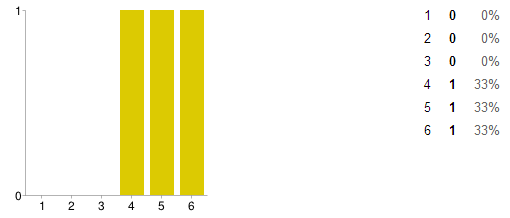
When the project ended I understood I had to come up with some 'hard data'. Because no matter what fantastic results I get, some people (read: teachers) need that to actually understand what happened. And the results are in. And again, it's not any science (this time 10 answers = 100% of participants!) research at all, but still interesting. I use a scale of 1 to 6 because I want to force my students to have a second thought, either they've learned a little bit less (3) or a little bit more (4).

The motivation has been high
And what makes the motivation keep that high? Well for example: build, experience, new way of learning, learn by doing.


Distance, work from home
This will surprise most educators I believe. It's much more fun to do it together, in a classroom, instead of doing it from home. Just because you have a ability to work from home you don't want to do it.


Experience
Minecraft instead of classic "rostrum teaching", with other words: be able to learn through a tool like Minecraft.


Goals
Have we reach the goals we put up together before the project started?
  • Information search (youtube, wiki...)
  • Math
  • Environmental thinking
  • Art and design
  • Civics
  • Languages
  • Multimedia
  • Technical Drawing (3D from 2D)

What unintentional learning occurred?
This is a funny one and you can read more about it here, almost the same as the key competences for lifelong learning from the Finnish National Board of Education (FNBE) 
  • Be able to plan and be proactive (7) 
  • Boolean value (redstones = electrcal engineering) (3)
  • Ability to manage information (4)
  • Analysis Ability (2) 
  • Cooperation (6)  
  • Understanding how communities were built in the past and how to utilize natural resources (2)
  • Materials properties and structure of (5) 
  • Interaction between man, society and nature (3)
  • Design and creation (6) 
  • Programming and scripting (command block) (4)  
  • Solving Problems (8) 
  • Think Programming and Logic (command block) (2)

Problem solving
In what ways or channels have you solved upcoming problems?


How much have you enjoyed this project?


Did you experience that you got help from the teacher?


Knowledge about Minecraft
Have it felt strange that you might know more about the tool (Minecraft) than the teacher?


Self-assessment
Do you feel that this elective course has given you something positive?


If I try to use Ruben R. Puentedura's SAMR model to Minecraft it might be something like this:

The lowest level is Substitution: 
Technology acts as a direct substitute  
Instead of work with papers, students use computers.

The second level is Augmentation: 
Direct substitute with functional improvement 
Instead of book encyclopedia students use wikis and YouTube to solve problems. 

The third level is Modification:
Technology allows for a significant task redesign 
With the Minecraft tool the students started to create 3D models of their schools and meanwhile learned different subjects, took screenshots, videoclips and used them in reports or microblogs.

The fourth level is Redefinition: 
Technology  allows for the creation of new tasks, previously inconceivable for example creating a calculator (electrical engineering), use a 2D sketch to create a 3D model (technical drawing), the experience: to actually walk around inside your 3D model and feel as you walk there in real life.

Finally, I have to agree with Techno Rookie about the best part. Neither did I had to move through these levels or through the SAMR model, I challenged my students, they adapt and overcome, with other words: they did the rest. 

14 maj 2014

Minecraft: Hack the math

A working mate convinced me to see this TEDx clip on YouTube with 13yo Logan Lapante and hackschooling.


Hackschooling
He isn't talking about geeky nerds sitting in their parents basement, creating and spreading data viruses. Not at all. Among other things he explain the hackschooling mindset with this picture.


And I can't help thinking of Gabe Zichermann when he talks about what increasing fluid intelligence, what you gain with playing games, gamification.


The hacker Mindset.
Back to Logan LaPlante and he explains. Hackers are innovators, hackers are people who challenges and changes the systems to make them more differently, to make them better, it's how they see it. It's a mindset. And according to Lapante, Everything could, and should, be hacked: skiing, education...

You could take shortcuts or hacks to get a better, and faster, result. Flexible, opportunist, and never loose the sight of healthy, happy and creativity the 8 TLC (look at the video!). But, here's the thing, doing this usually freaks people out. Especially teachers...

But hey!?
Where have I heard that before? 
And where have I seen results as that?
Well, after listen to Lapante I realized:
I've hacked the math! 
With Minecraft and Gamification (yep, again: Nobel price, here I am).

As most teachers who uses Minecraft we see increasing math skills. But it doesn't stop there, we also have the interesting point: What unintentional learning occurred? 

The 'hard data' and my evaluation
My school wanted the "hard data" to be shown. Because whatever results I gain, they need figures, something "on paper" to see it actually worked. So I had to come up with some sort of evaluation, and thanks to master Stephen Elford I got some ideas what questions to ask. 

This is definitely not any science, six students had the chance to use Minecraft as an option with geometry, three of them have answered my evaluation. At least one of them has dyscalculia. My scale is 1-6, where 1 is nothing and 6 very much, and there's no middle - either they are a bit weaker (3) or a bit better (4), I force them to think.

Knowledge before the Minecraft experience?


How fun I believe Math is?


Motivation during our classes and by the way, I got the same result when use Minecraft to learn math...


Your activity during class?
The activity was a fun thing. All of my participants are students that usually stays focus for 15 minutes. Now they where all sitting, without a break, for two hours. The only time they used their smartphone was when they needed the calculator. One of my students also participated in class when he was home and sick.


I have them to choose the best and worse lesson and put on a scale how fun it was, how much help they got from that class. They had to give an answer to the worst one but as you can see, it's still a very good lesson. They can't explain why, they had to pick one. 

Best lesson on a scale


Worst lesson on a scale


Knowledge afterwards
And I believe this is an important one and please compare it to the first graph. Do you experience you have better knowledge about math and geometry now? 


How much have you enjoyed using Minecraft during this math experience?


What have you learned (including the unintentional learning)? 
Scale, geometry, to be creative, solve problems, convert 2D to 3D, technical drawings, planning and foresight. 

And of course: 
They couldn't believe math could be funny!

6 maj 2014

What unintentional learning occurred?

Something interesting just happened...

We were looking at responses from my first Minecraft project and my colleague Jenh (and upcoming MinecraftEDU partner) just saw something very interesting. Among a lot of questions in my evaluation there was one where I wanted the participants to reflect about what unintentional learning they had occurred?

Sorry, it's all swedish :D and it's not a science research I know that, but still very interesting.


To the left
Key competences for lifelong learning from the Finnish National Board of Education (FNBE) and according to Google Translate (for once it seems right) and I quote:

An important part of professional skills is the key competences for lifelong learning. They are the skills required for continuous learning and for that individual to come to terms in the future, in new situations and in a changing world of work. The means improved vocational education and improved civic skills, which are needed in all industries. Competencies needed for the students / candidates are to follow the changes in society and working life and adapt in a changing world. 

Key competences for lifelong learning 

  1. lifelong learning and problem solving 
  2. interaction and collaboration 
  3. professional ethics 
  4. health, safety and working 
  5. initiative and enterprise 
  6. sustainable Development 
  7. aesthetics 
  8. Information and media literacy 
  9. mathematics and science 
  10. technology and information technology 
  11. active citizenship and different cultures.

(end quote)

To the right
And according to the responses of the evaluation:

  1. Be able to plan and be proactive (6) 
  2. Boolean value (redstones = electrcal engineering) (1)
  3. Ability to manage information (4)
  4. Analysis Ability (2) 
  5. Cooperation (5)  
  6. Understanding how communities were built in the past and how to utilize natural resources (2)
  7. Materials properties and structure of (4) 
  8. Interaction between man, society and nature (3)
  9. Design and creation (5) 
  10. Programming and scripting (command block) (2)  
  11. Solving Problems (6) 
  12. Think Programming and Logic (command block) (1)
Something very interesting happens there...

14 april 2014

Technical drawing

So for the next year we will try to have a new course to the Business Information Technican (datanom) students. We call it "technical drawing" where we want the students to have a clue of different diagrams and how to produce them in 2D (paper/pencil and maybe some easy digital tool).

The next step, to make them think in a 3D way is to use Minecraft.

And yes. 
I know.
There's better 3D tools, if you want to do 3D, but hey!
First you have to win your students!
First you have to catch their interest!

At the moment we have way too many students playing games during classes. If we take control over one of the games I believe they find the class so interesting they want to participate. 

You have to make your lessons more interesting than games, and so fun they (the students) don't want to do something else but listen to you.

Then, you could apply a more advanced tool: 3D Studio Max or Blender. 

But if you start with a tool way too advance you will loose half of the class immediately, and we're trying to avoid that, remember?

You shouldn't need a course or two just to produce simple 3D stuff. After all, we just want them to try to practice think (and experience) 3D.

Why do something complicated when you can do it easy?
Keep It Simple Stupid!

And I believe one of those ways could be the Minecraft way!

10 april 2014

First project about to end

My first Minecraft project is about to end and now I have to sum up what we have learned and what Minecraft could be used to (in my school). And that's a lot. My participants had two goals to reach: build up their school and build a city, if possible - the Future City.

Unfortunately, 16-18 years old are a bit too old to apply sustainable development, ecological thinking and recycling. The only thing that they actually started to think about was green energy, like solar or water. But on the other hand, that gives us a chance to really use Minecraft as a pedagogy tool to explain all this and connect it to chemistry and physics (and biology that you don't read at a upper secondary vocational institution in Finland).

And now the goodies. two of my students have made documentations about this first project as their final project (before their exam). That's really awesome! This first movie is a big one and it contains both projects. The first 8 minutes is about the building process and the ready school building. The other half is the documentation of our city.


My students said they wanted to have the whole documentation in one place and therefor the "second part", like after 8 minutes, is the same as this (below). But I do think this version has better quality, or it could be just me. Funny fact: the indoor swimming pool and the bookstore in the end of the movie are created by my 5 yo daughter AquaVera.


The hospital itself is so fantastic it deserves to be seen as a stand alone clip.